All Categories
Featured

Table of Contents
- – A Professional Approach To Pennsylvania Solar P...
- – How Do Pennsylvania Solar Panel Installation C...
- – How To Determine The Proper 85–100% Annual Usa...
- – Determining Whether Your Pennsylvania Solar Pa...
- – Is The $7,000–$18,000 Battery Storage Add-on P...
- – Analyzing Your Property For Solar Panel Instal...
A Professional Approach To Pennsylvania Solar Panel Installation Companies
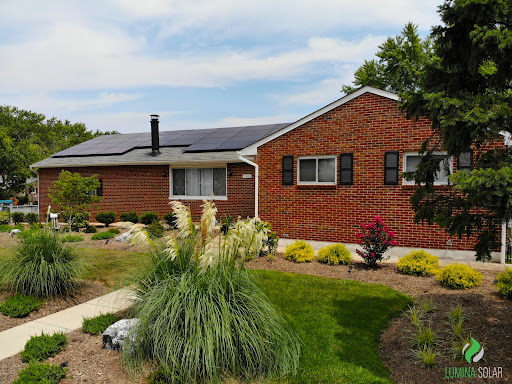
When you begin researching Pennsylvania Solar Panel Installation Companies, you must balance the substantial upfront investment against the long-term potential for utility savings. With an average price per watt of approximately $2.58, a standard 5 kW solar setup bears an approximate price of $12,891. Because each solar installer offers different pricing structures, contractor warranty lengths, and financing alternatives, you need to evaluate the trade-offs between cash purchases, solar leases, and power purchase agreements thoroughly. Determining which provider offers the best value requires you to evaluate factors like equipment quality, technical certifications, and the impact of local incentive programs. By assessing these variables against your home's particular energy needs and site suitability, you will gain the clarity needed to select the right partner for your project.
“Always enlist the services of a reputable company with licensed and insured technicians to do the installation and maintenance to avoid damaging your roof.” — Lumina Solar PA
How Do Pennsylvania Solar Panel Installation Companies Vary Regarding Their Mandatory Insurance And Licensing?
Pennsylvania Solar Panel Installation Companies evaluate based on their adherence to strict regulatory standards, which include maintaining specific business credentials and comprehensive insurance coverage to safeguard your property during the installation process. You should view these requirements as the baseline for assessing any potential solar installer, as professional accountability is the primary safeguard against liability for accidents or inferior work.
“Solar installers operating in Pennsylvania are considered home improvement contractors and must maintain a certificate of registration issued by the Bureau of Consumer Protection.” — pa.gov
When you evaluate a candidate, you must confirm they possess the necessary documentation to work legally within your jurisdiction. A valid solar firm will have the following protections and permissions in place:
- General Liability Insurance: Shields you from financial loss in the event of property damage or accidental injury during the PV installation.
- Workers' Compensation Coverage: Provides mandatory coverage for employees, stopping you from becoming liable for injuries occurring on your roof.
- State and Local Contractor Licenses: Confirms the business is registered and authorized to perform electrical and structural alterations in your specific jurisdiction.
- Electrical Certification: Ensures that the technicians performing the grid interconnection meet the technical standards required for secure operation.
You can verify these credentials by requesting a certificate of insurance and requesting the exact license numbers linked to the business entity. Before signing any service agreement, verify these license numbers directly with your local building department or the state’s contractor registry to confirm that the documentation is valid and active. Request a copy of their current insurance certificate to verify the policy limits are sufficient to protect the total value of your home.
When evaluating Pennsylvania Solar Panel Installation Companies, you must weigh the upfront solar installation cost, which averages $2.58 per watt, against long-term benefits from utility buyback and solar renewable energy credit incentives that produce $250 to $480 annually. Deciding between a solar loan, solar equipment lease, or solar service agreement requires balancing ownership benefits against initial capital requirements, just as you must decide if the $7,000 to $18,000 addition of a solar battery justifies the expense based on your site's insolation hours. To guarantee your investment is protected, you should contact Pennsylvania solar panels to confirm that your chosen solar installer maintains North American Board of Certified Energy Practitioners certification, carries adequate insurance, and provides a robust workmanship warranty with the standard 25-year manufacturer panel warranty. Whether you intend to offset 85 to 100 percent of your consumption with a 5 kW or 12.87 kW system, your final choice depends on balancing these financing options and hardware quality against the specific roof solar suitability of your home.
How To Determine The Proper 85–100% Annual Usage Offset Target For Your Solar Panel Installation
An 85–100% yearly usage offset target for your solar fitting is a strategic decision that depends on evaluating your historical electricity consumption alongside the physical constraints of your property. By analyzing your utility bills from the past twelve months, you can calculate a baseline of your total kilowatt-hour demand. When Finding reputable solar panel installation companies in Pennsylvania, you should prioritize those that perform a detailed site analysis to reconcile this consumption data with the specific insolation hours available at your location.
“Where net metering is one-for-one at retail — Pennsylvania, New Jersey, Virginia, Maine — sizing to 100% of annual usage is defensible, because an exported kilowatt-hour and a consumed one are worth the same.” — solaramerica.io
Determining the appropriate system size involves balancing your energy goals against the practical limitations of your roof and the regulatory environment. Oversizing a system beyond your annual needs is often discouraged because net metering policies may restrict the reimbursement you receive for excess power sent to the grid. The subsequent table illustrates the trade-offs associated with various sizing approaches:
| System Size Goal | Primary Benefit | Main Constraint |
|---|---|---|
| 85% Offset | Reduced upfront cost; maximizes ROI | Remaining 15% bought from utility |
| 100% Offset | Maximum monthly savings | Requires larger roof footprint |
| Oversized (100%+) | Future-proofs for added appliances | Restricted by utility export rules |
Before finalizing your system design, verify the projected production output using site-specific irradiance data to guarantee the estimated generation aligns with your household needs. Request a output estimate from your installer that accounts for local shading patterns and roof orientation to avoid overestimating your potential annual yield.
Determining Whether Your Pennsylvania Solar Panel Installation Company Has The Necessary Technical Expertise
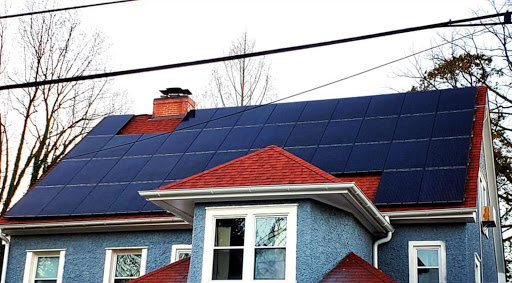
Verifying the technical competence of Pennsylvania solar panel installation companies and what they offer is most reliably achieved by confirming their possession of NABCEP license. This credential serves as a primary indicator that a technician or firm has satisfied a rigorous, nationally recognized standard for solar photovoltaic system planning and installation. Because solar panel installation involves complex electrical integration and roof structural factors, relying on uniform third-party verification helps reduce the risk of improper system configuration or safety hazards.
“Any solar company doing residential work over $5,000 must register with the Office of the Attorney General as a Home Improvement Contractor (HIC) under 73 P.S. §517.1 et seq.” — facebook.com
When you assess a potential solar company, consider the following ranking of technical validation markers to ensure your project meets professional standards:
- NABCEP Accreditation: The benchmark standard for individual technician proficiency in design and installation.
- State and Local Electrical Licensing: The compulsory standard for lawful practice and code adherence within your jurisdiction.
- Manufacturer Certification: Specific training badges offered by equipment brands, which often unlock extended product warranties.
- Proof of Insurance: Active general liability and workers' compensation coverage to safeguard your property during the PV installation.
Beyond these certifications, you should ask for documentation of past projects that mirror your home's roof pitch and electrical requirements. While a senior certification provides confidence, it does not replace the necessity of reviewing a specific installer's history of permitting and utility interconnection success. Before signing a contract, ask the installer to provide their active license number and a verification contact for their current insurance policy.
Is The $7,000–$18,000 Battery Storage Add-on Price Worth The Cost For You?
A $7,000–$18,000 battery storage addition cost represents the additional investment required to integrate energy storage into your solar panel installation to achieve autonomy from grid fluctuations. When assessing Pennsylvania-based solar panel installation companies to consider, you must determine whether the capacity to store excess generation for use during peak evening hours or grid blackouts exceeds the substantial increase in your total project budget. These systems utilize varying chemistries and capacities, directly impacting both the upfront price and the total energy capacity available during a power outage.
“House Bill 2380, sponsored by Rep. Nikki Rivera, D-Lancaster, was approved by the committee by a 14-12 vote, which would establish targets for battery energy storage programs.” — pahouse.com
| Feature | Standard Solar Only | Solar with Battery Storage |
|---|---|---|
| Grid Independence | None (system shuts down) | High (backup power capability) |
| Energy Usage | Real-time consumption | Time-shifted consumption |
| Project Complexity | Standard electrical integration | Advanced load management |
Most homeowners incorporate these units to protect against grid instability or to optimize the value of their self-generated electricity. Because solar panel installation performance is linked to your insolation hours, a storage unit functions as a buffer, ensuring your home remains powered even when your array is not actively producing electricity. When choosing your equipment, compare the round-trip efficiency ratings and cycle life of various lithium-ion or alternative chemistries to ensure the hardware aligns with your long-term energy goals. Always request a site-specific load analysis from your installer to confirm that your chosen storage capacity can realistically support your essential household appliances during an prolonged outage.
Analyzing Your Property For Solar Panel Installation Potential
Your property’s aptness for a solar fitting depends on specific environmental and structural variables that dictate how much electricity your array will generate. When you evaluate who are the top solar setup companies in Pennsylvania, you must look for partners who conduct a thorough site assessment to confirm your roof can sustain the hardware and gather sufficient sunlight. Because Pennsylvania’s climate relies on steady exposure, your roof’s positioning and physical condition are critical elements in the long-term efficiency of your energy investment.
“The height of the system shall be less than 18 inches above the adjacent roof.” — phila.gov
To determine if your home is a candidate for a high-performance system, consider these primary physical site requirements:
- Orientation: A south-facing roof area provides the ideal angle for collecting sunlight throughout the day.
- Pitch: A roof incline between 15 and 40 degrees is ideal for maximizing annual energy production in this region.
- Structural Integrity: Your roof must be in sufficient condition to bear the weight of the panels and the mounting hardware for the duration of the system's life.
- Obstructions: Shading from trees, chimneys, or neighboring buildings substantially reduces output and should be addressed before installation.
If your roof is aged or structurally compromised, you should factor the cost of a pre-installation roof replacement into your overall project budget. A professional technician will use custom software to simulate your roof’s specific shading patterns and alignment to forecast your annual output precisely. Ask for a detailed shading analysis from your potential installer to verify that your particular site layout will meet your energy production goals.

Table of Contents
- – A Professional Approach To Pennsylvania Solar P...
- – How Do Pennsylvania Solar Panel Installation C...
- – How To Determine The Proper 85–100% Annual Usa...
- – Determining Whether Your Pennsylvania Solar Pa...
- – Is The $7,000–$18,000 Battery Storage Add-on P...
- – Analyzing Your Property For Solar Panel Instal...
Latest Posts
Why You Require Professional Virginia Solar Panel Installation Companies
Choosing Professional Pennsylvania Solar Panel Installation Companies
Monetary Benefits Provided By Maryland Solar Panel Installation Companies
More
Latest Posts
Why You Require Professional Virginia Solar Panel Installation Companies
Choosing Professional Pennsylvania Solar Panel Installation Companies
Monetary Benefits Provided By Maryland Solar Panel Installation Companies